Palworld 1.0 Breeding Guide
1.How breeding works
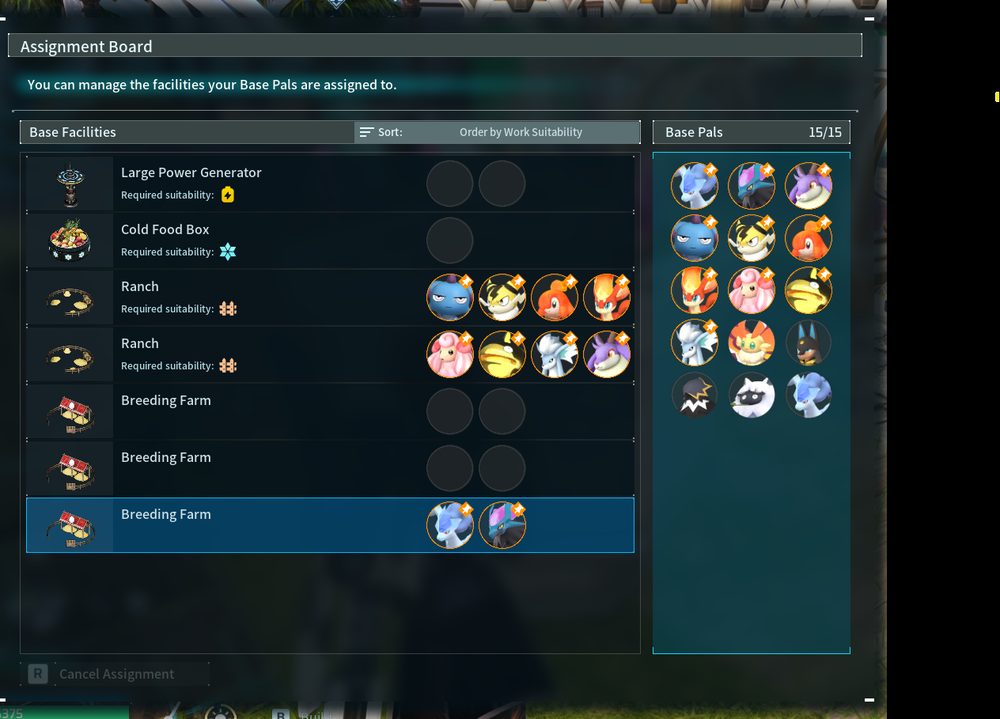
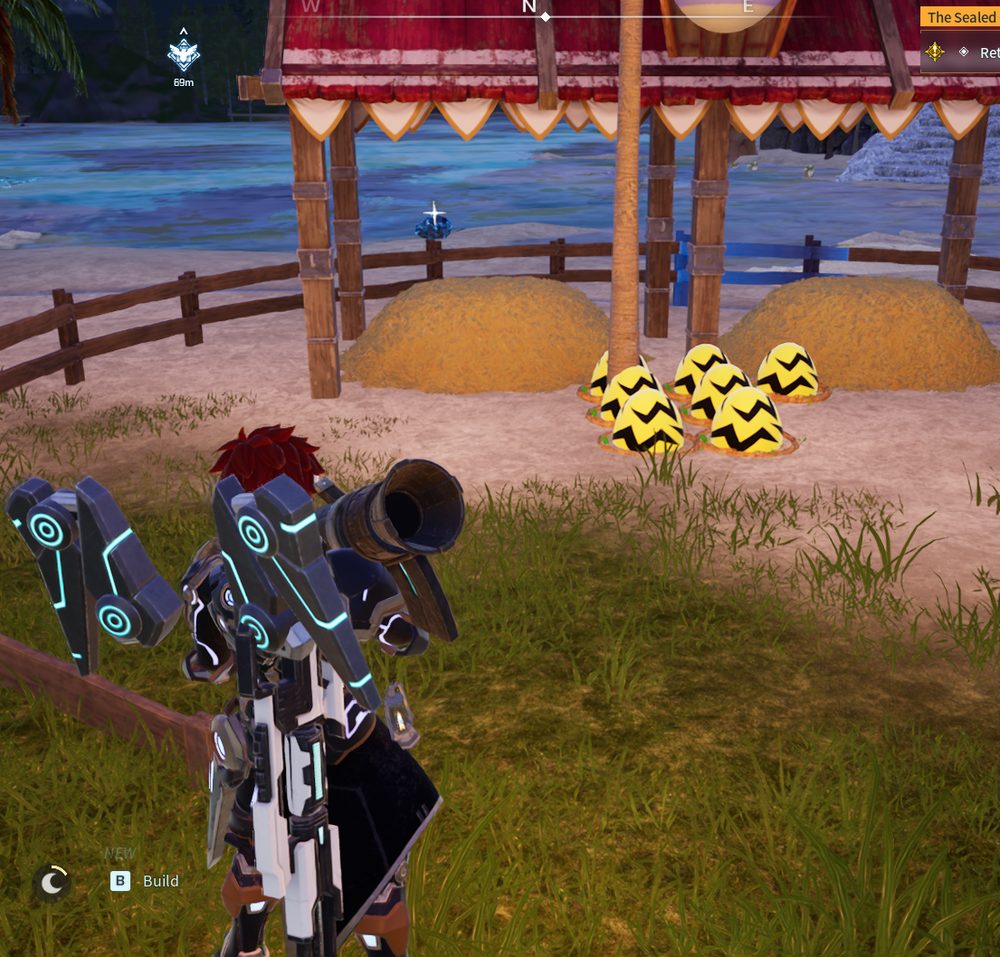
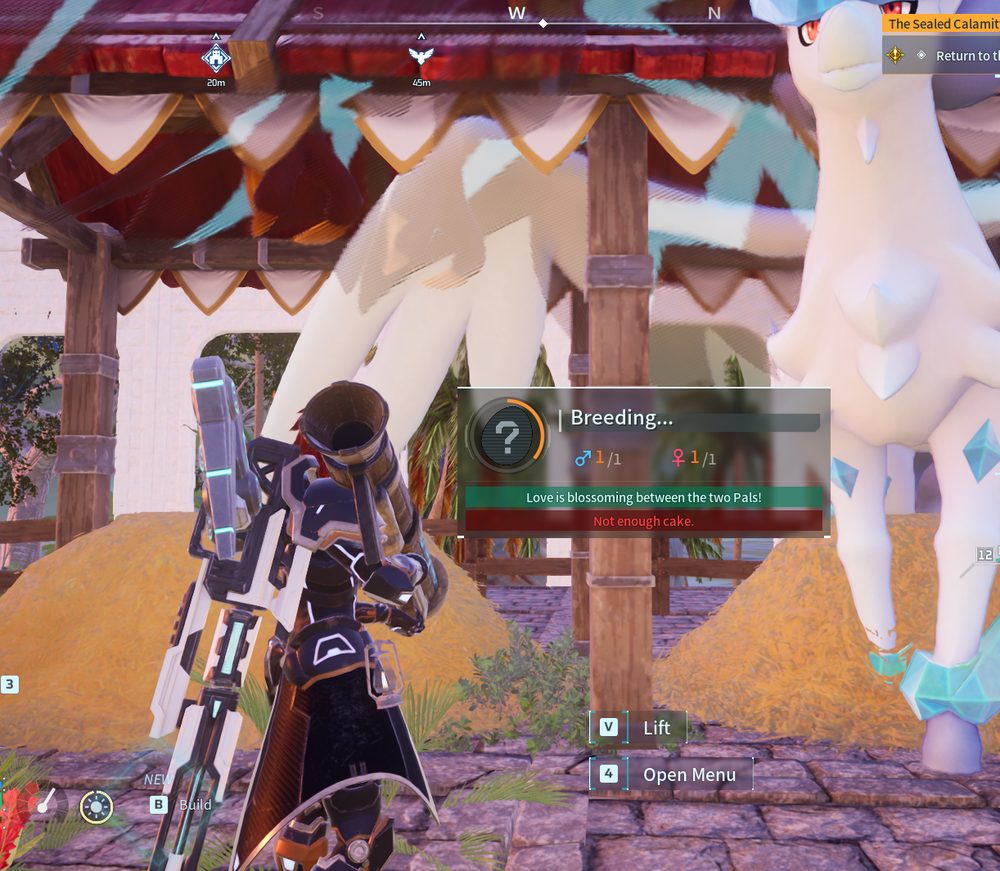
Breeding unlocks at level 19 with the Breeding Farm. The loop is simple:
Gender is the only pairing requirement — any male can breed with any female. Every egg costs one whole Cake, and the pair keeps laying as long as there's cake in the box, so breeding is really a cake-supply problem more than anything.
2.The Cake
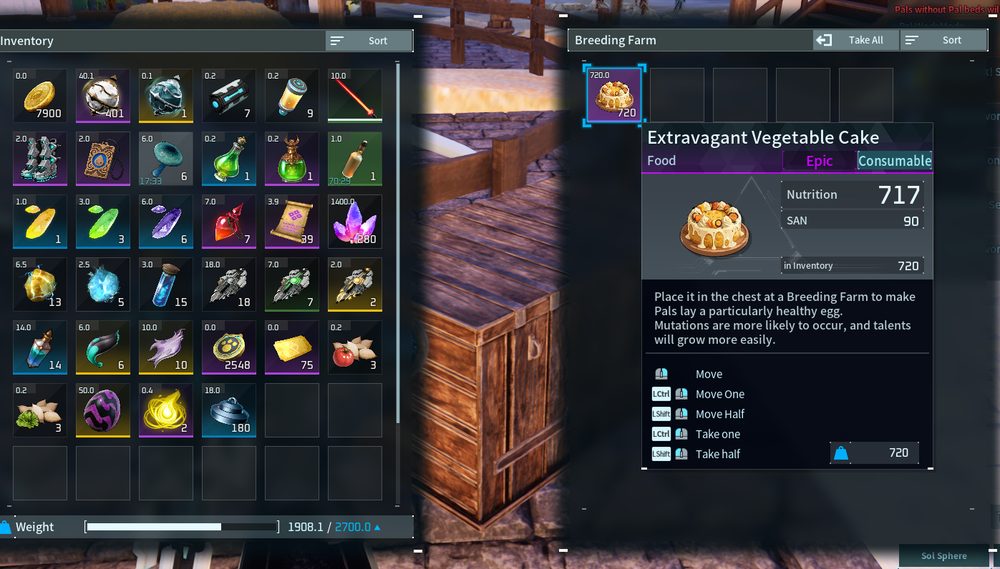
The standard Cake is what gates all breeding — no cake, no egg. Unlock the Cooking Pot at level 17, assign a Kindling pal, and cook:
| Ingredient | Qty | Easiest source |
|---|---|---|
| Flour | 5 | Grind 3 Wheat → 1 Flour at the Mill (level 15); grow Wheat on a plantation |
| Red Berries | 8 | Gather near spawn, or a Berry Plantation |
| Milk | 7 | Mozzarina on a Ranch |
| Egg | 8 | Chikipi on a Ranch |
| Honey | 2 | Beegarde or Cinnamoth on a Ranch |
Set up a dedicated cake base — a Ranch with Mozzarina + Chikipi + Beegarde, a wheat plantation, and a Mill — and cakes basically make themselves. See The 3-Base Setup for a ready-made cake/breeding roster.
3.How the child is decided
Two rules decide what hatches:
1) Special (fusion) combos. A set list of exact parent pairs always produces a specific fusion pal — for example Frostallion + Helzephyr always makes Frostallion Noct. These are fixed and don't follow the formula below.
2) Everything else uses the breeding-rank formula. Each pal has a hidden breeding rank; the child is the standard pal whose rank sits closest to the average of the two parents' ranks. This is why Penking + Bushi now lands on Sibelyx in 1.0 — their averaged rank moved.
You don't have to memorise any of this. Our Breeding Calculator does it both directions: pick two parents to see the child, or pick a target plus one parent you own and it lists every partner that works.
Open the Breeding Calculator →4.Passive skills (the part that actually matters)
Which pal you make is only half of it — the passives it inherits are what make a pal strong. A baby can inherit passive skills from either parent, but it's a roll, not a guarantee:
- Any given passive on a parent transfers only about 46% of the time.
- Roughly a third of eggs inherit no passives at all.
- A pal has up to 4 passive slots, so stacking a clean 4-passive build takes multiple eggs.
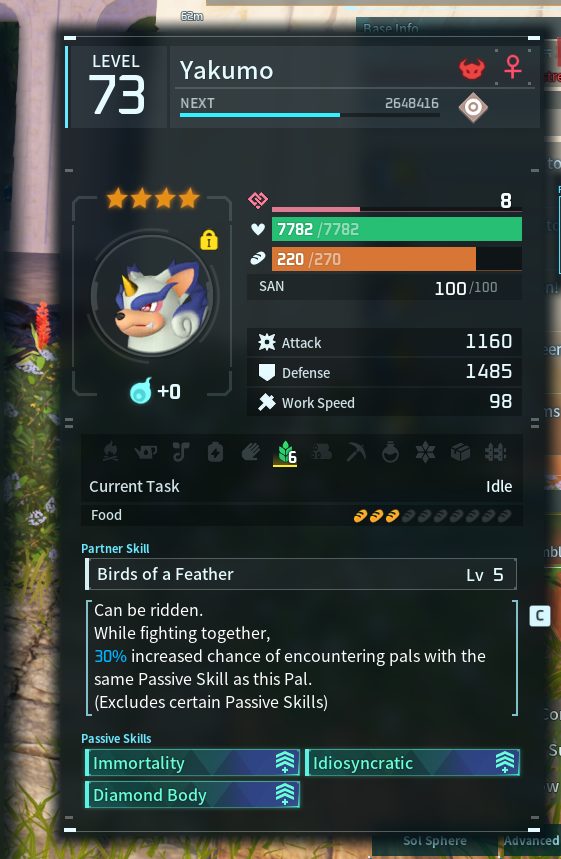
The practical method: lock in the passives you want first (breed parents that already carry them, re-breeding until they land together), then worry about stats. Passives are far harder to fix after the fact. A higher-tier Special Cake boosts multi-passive inheritance and can push a roll toward the full four. Full detail — including which passives breed vs. which only Yakumo can copy — is in the Passive Transfer guide, and every passive's effect is in the Passive Checker.
5.Mutation (new in 1.0)
Every breed now has a small chance to produce a mutated egg. The pal that hatches is stronger than the normal result — higher base stats, plus one of five mutation-exclusive "rainbow" passives you can't obtain any other way (the strongest being Immortality). A mutated egg can even hatch a different species than the parents would normally produce.
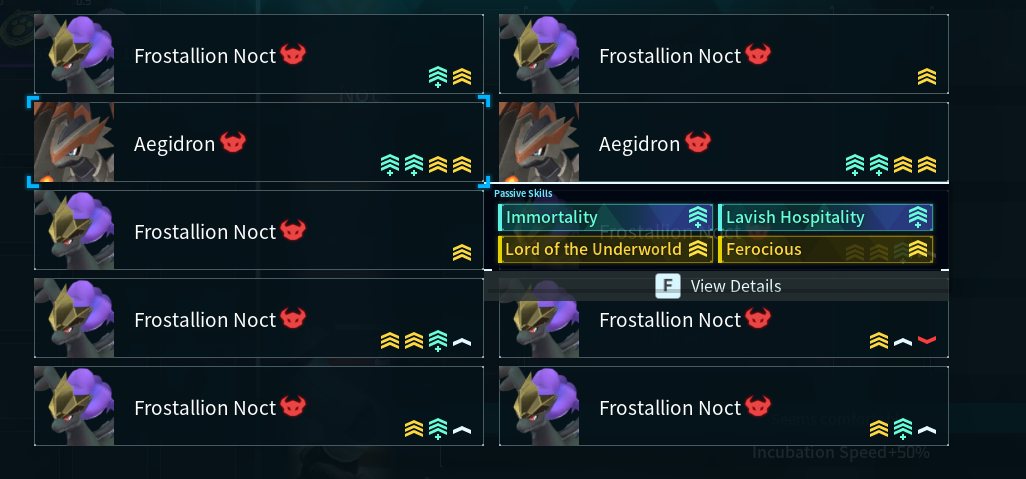
The five rainbow passives and how they transfer are listed in the Passive Transfer guide.
6.Awakening (new in 1.0)
Awakening is a separate, endgame system — it doesn't compete with breeding, it comes after it. It spends Radiant Gems gathered at the World Tree to permanently boost a finished pal:
- Pals at the World Tree drop element-typed Radiant Gems (Fire pals drop Fire gems, Dark pals drop Dark gems, and so on).
- At the Ancient Workbench (Technology 67), combine 50 gems of one element + 10 World Tree Holy Waters to forge an Awakening Crystal of that element.
- Use the crystal on a pal of the matching element for a permanent stat boost, marked by a golden aura.
Because it's a one-time permanent upgrade, you awaken last — after the pal's species, passives, and condense rank are all locked in.
7.Combos everyone wants (verified for 1.0)
These are checked against the current 1.0 combination table and our calculator. For anything not listed, use the calculator's reverse lookup — it covers every pal in the 1.0 Paldex.
| Target | Parents | Notes |
|---|---|---|
| Anubis | Starryon Primo+Roujay |
Cheapest route in 1.0. Not Penking + Bushi anymore. Two Anubis also breed Anubis — the usual way to farm it for better passives. |
| Frostallion Noct | Frostallion+Helzephyr |
Fusion combo — one of the best dark attackers. |
| Jormuntide Ignis | Jormuntide+Blazehowl |
Top fire mount + kindling worker. |
| Eidrolon Ignis | Eidrolon+Suzaku |
New 1.0 pal — fast flyer, strong attacker. |
| Suzaku Aqua | Suzaku+Jormuntide |
Water variant used for watering + a fast water mount. |
| Faleris Aqua | Faleris+Jormuntide |
Water fusion of the fire raptor. |
8.The perfect-pal workflow
Putting it all together, a finished endgame pal comes off this line:
Steps 1–2 are the calculator's job; step 3 is a patience game; steps 4–5 are pure resource grind. For the combat side of "which pal is worth building," see the Combat Tier List & Builds.
Plan your breed in the calculator →Accuracy note: combos and inheritance figures are checked against the 1.0 combination table and our own calculator. The mutation rate is a community estimate (Pocketpair hasn't published it) and is flagged as such above. Spot something off after a patch? Tell us — we update fast.